Every job below is one we do ourselves across Yorkville.
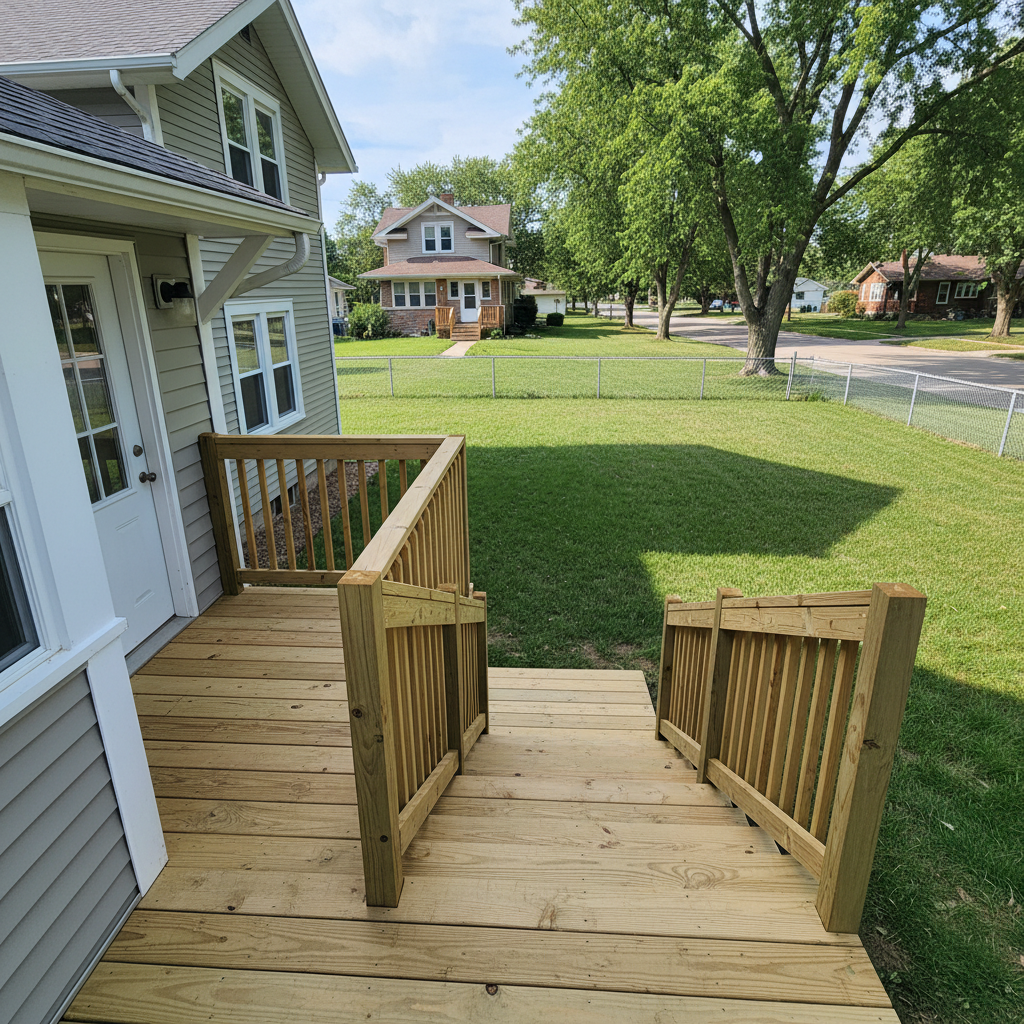
We build decks from the ground up, starting with footings poured below the frost line so the structure doesn't heave every spring. Framing is sized to current span tables for your joist spacing and board direction, not just whatever the last contractor used. We'll walk you through pressure-treated, cedar, or composite decking before anything gets ordered.
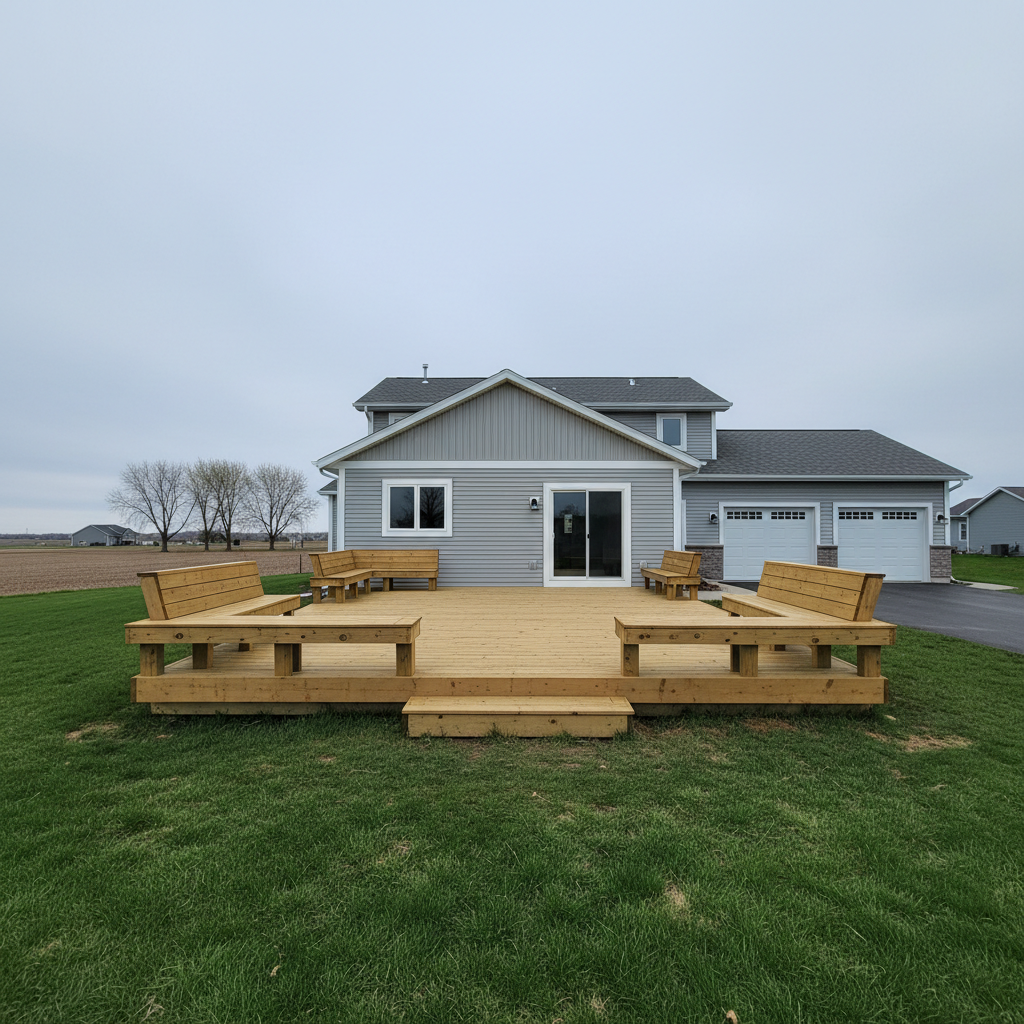
Some yards need a deck that steps down with the grade, wraps around a tree, or ties into an existing patio, and a stock plan stops working there. We'll sketch layout options for multi-level decks, built-in benches, or a pergola over part of the deck, and price each version separately. You pick the one that fits the yard and the budget, not just the one that's easiest for us.
A deck that bounces underfoot usually means an undersized beam or a joist rotted where it meets the ledger, and that's a framing fix, not a board fix. We pull boards as needed to check the frame underneath before quoting anything, because patching over rotted structure just moves the problem down the road. Loose railings and wobbly stairs get the same treatment: find the actual failure point, not just tighten what's loose.
Gray, splintery decking is almost always sun and moisture damage, not a sign the wood is done for. We pressure wash, let the deck dry for a couple of days, sand down rough spots, and apply a penetrating stain or sealer rated for Illinois winters. Composite decking skips this step entirely, which is one of the bigger arguments for it if you don't want a re-coat every two to three years.
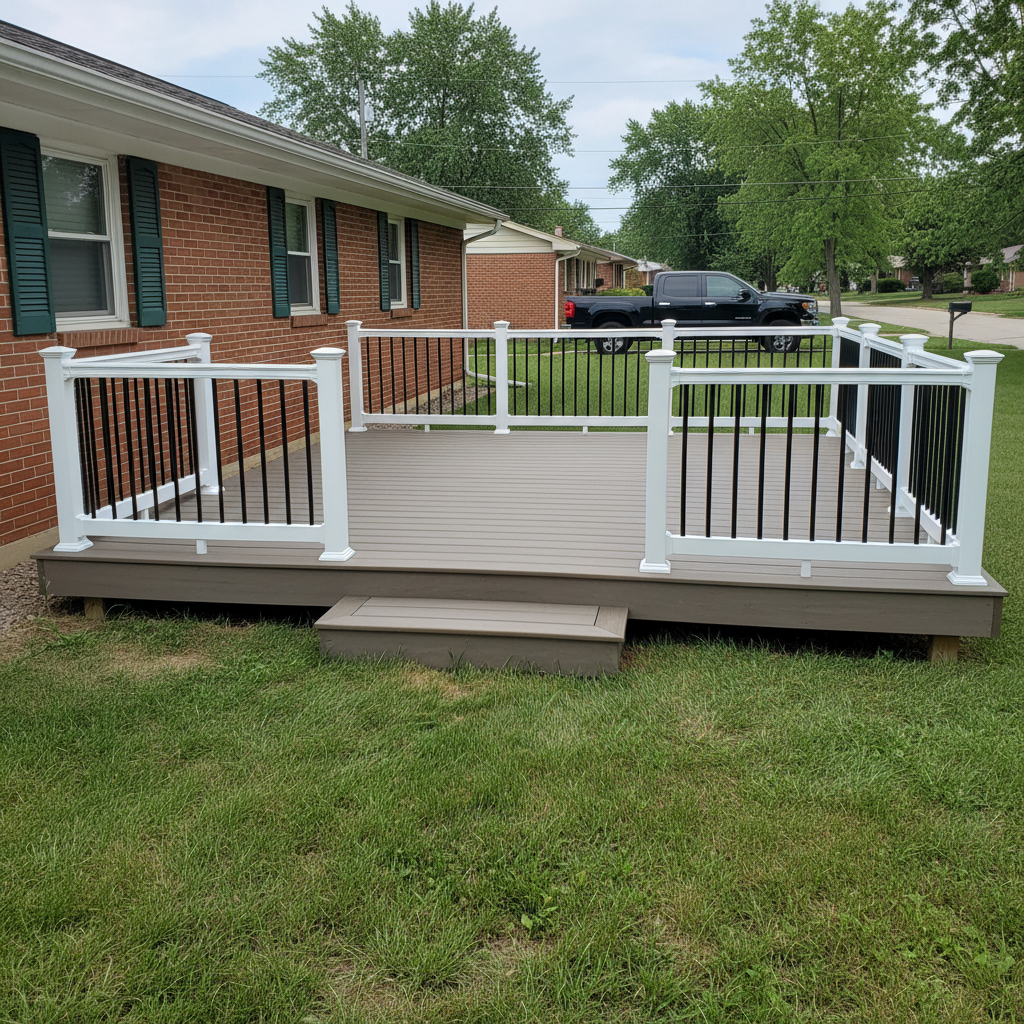
Composite decking costs more upfront than pressure-treated pine, usually by a few thousand dollars on an average deck, but it doesn't crack, splinter, or need staining. We install hidden fastener systems on composite boards so you don't see a screw head anywhere on the surface. The substructure still gets built the same way, with proper joist spacing and flashing, since composite boards don't fix a bad frame underneath them.
Railings have to meet a 36 or 42 inch height code depending on your municipality, and baluster spacing has to keep a 4 inch sphere from passing through. We rebuild railings that have come loose at the post, usually because the posts were only lag-bolted to the rim joist instead of bolted through with a structural connector. Cable rail, horizontal baluster, and standard picket styles are all options depending on what your HOA or your own taste calls for.
Patios get excavated and built on a compacted gravel base, usually 6 to 8 inches deep, so the pavers don't shift or sink after the first hard freeze. We set the pavers with a consistent joint pattern and sweep polymeric sand into the joints to keep weeds and ants from working up through them. A paver patio connects well to a deck if you want a transition from a raised outdoor space down to ground level.
A pergola over part of a deck cuts the afternoon sun without blocking the whole yard view, and it gives you a spot to run string lights or a ceiling fan off. We anchor posts into the deck framing itself, not just through the decking boards, so wind doesn't work the structure loose over a few seasons. Fully covered decks with a shingled roof are a bigger build and usually need their own permit review.
If the frame underneath is still solid, you don't always need a full rebuild, you just need new decking on top of it. We replace cupped, splintered, or rotted boards one at a time or resurface the whole deck, matching board spacing so the new material doesn't sit proud of the old. This is usually a faster and cheaper option than demolition if the deck is less than fifteen years old.
Some decks have enough rot in the ledger, posts, and beams that patching doesn't make sense anymore, and tearing it out is the honest answer. We haul off the old lumber and hardware, check the ledger connection to the house for water damage before rebuilding, and start fresh to current code requirements. This is usually the right call on anything over twenty years old that's never been resealed.
Four steps, and no surprises in any of them.
You tell us what you want doing, we look at what is actually there, and we ask the awkward questions early.
In writing, itemised, free. If something might add cost later we flag it now rather than at the end.
Same crew throughout. We cover your floors, keep the dust down and tidy up before we leave each day.
You point out anything you are not happy with and we fix it before the invoice, not after.
Deck and patio projects we take on across Kendall County and the nearby suburbs.
Questions that tend to come up once a project's actually underway.
Describe the problem and we will tell you what it probably is. No obligation.